DEEP SYSTEMS THINKING & THE ECOLOGY OF HUMAN EXPERIENCE
Keywords:
Deep Systems Thinking, Systems Education, Vicious and Virtuous Cycles, Ecological Consciousness, Interdisciplinary CurriculumAbstract
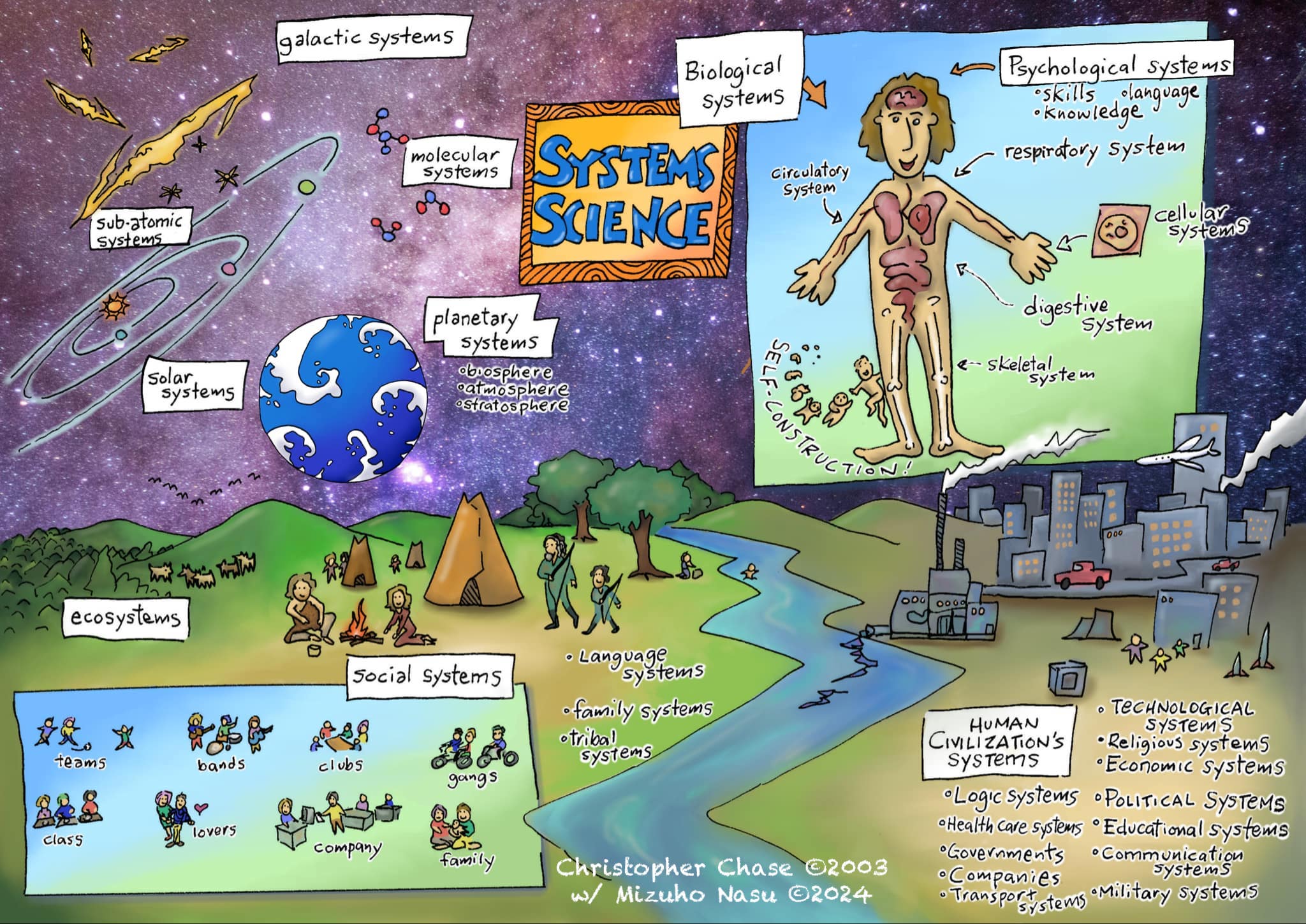
Deep Systems Thinking (DST) is presented here as an interdisciplinary pedagogical framework informed by a unified cosmological perspective that understands human life and experience as embedded within interconnected systems and as expressions of an evolving, meaningful Universe. This paper offers a reflective account of how a systems science curriculum has been developed over several decades of teaching and experimentation in Japan, shaped by ongoing student feedback and participation. The DST model brings together insights from systems science, ecology, cosmology, and contemplative traditions to help learners recognize patterns of interdependence, change, and learning across domains. It is organized around five foundational principles: that systems are universal, joined through flows, dynamic through cycles, experienced through consciousness, and shaped by human learning processes. A key contribution emerging from student experience is the distinction between vicious and virtuous cycles, which provides an accessible way to understand how unwise actions generate problems and instability, while systems thinking and wisdom supports increasing balance and stability. The aim is to share a practical and adaptable integrative framework that may support educators in fostering deeper understanding, collaborative problem-solving and creative systems thinking in an increasingly complex world.