Top of the Sourth Men's Network
An Exploration of Distributed Leadership
Keywords:
Distributed Leadership,, Hierarchy, Domination, Scapegoat, PatriarchyAbstract
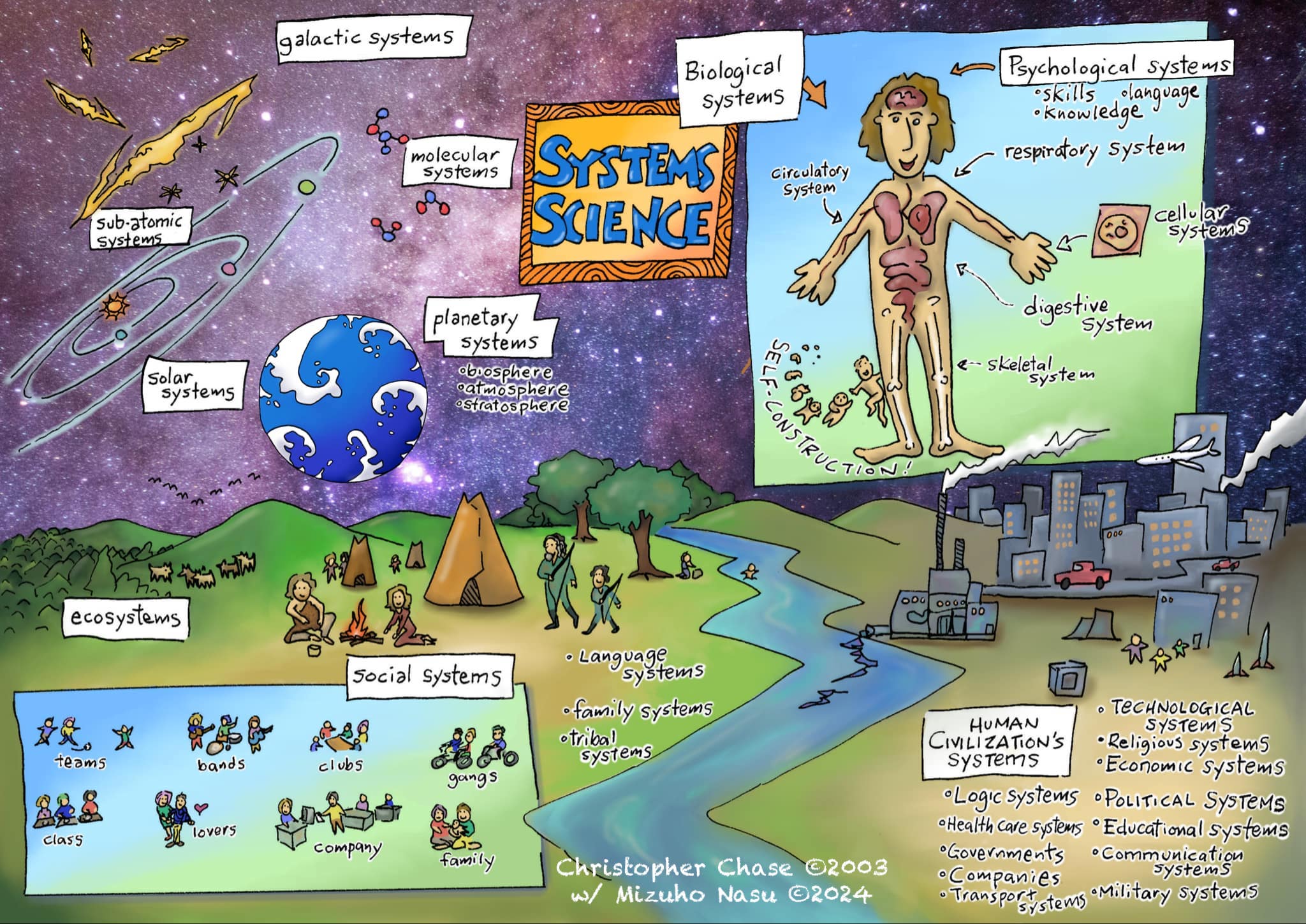
Since the beginning of time, we have attempted to create equitable social structures, yet we have inevitably fallen into dominating hierarchies that have marginalised and scapegoated sections of society, causing enormous suffering and pain. All living and social systems at an appreciable level of complexity find that forming hierarchies improves the efficient management of entropy. These hierarchies have all too often fallen into dominating hierarchies that oppress and subjugate people. Distributed leadership structures challenge the more traditional patriarchal way of functioning. Systems theory is ideally suited to explore the complexities of human social dynamics to shine light on this perennial problem and open a pathway to more equitable social structures.
The first part of the paper employs systems theory as a framework to understand why these dominating social dynamics so persistently reproduce themselves despite our fervent desire to avoid them. The second part of the paper is a case study of the development of a network of men’s groups in the Top of the South Island of New Zealand. The men’s groups have always been fiercely autonomous, so a standard hierarchical structure would not have been accepted; a distributed leadership model was utilised.
Finally, we investigate similar distributed leadership solutions developed on a larger scale in the northern Spanish city of Mondragon and Enspiral in New Zealand