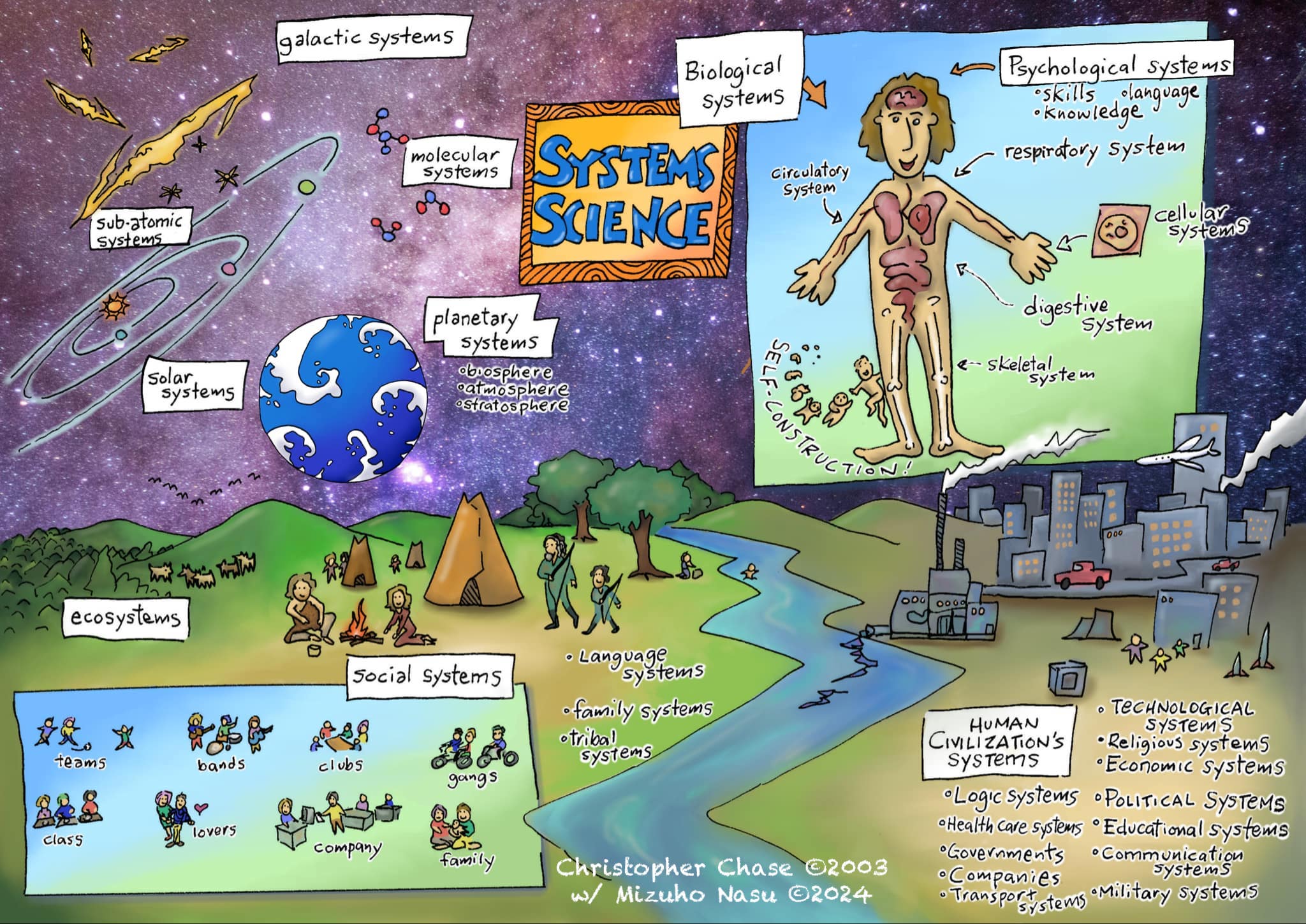
There is no common basis for integrating analyses of hierarchy in nature. Or is there?
How O-theory contributes to a theory of hierarchic order.
Keywords:
O-theory, dual closure, hierarchy theory, transdisciplinary integration, system theory.Abstract
Currently, there is no common basis for integrating analyses of hierarchy in nature. This presents a serious obstacle to developing a general systems theory. To address this issue, O-theory introduced the concept of dual closure, which is fundamental to the formation of systems known as "operators." Using fundamental particles as a basis, dual closure produces the first type of operators. These operators then produce the next dual closure and type of operators. Repeating this process creates a hierarchy of increasingly complex operators. This hierarchy is called the operator hierarchy.
According to the operator hierarchy, complexity can be unraveled in three ways: (1) The emergence of new operators, (2) The parts within an operator, (3) The interactions through which operators cause large systems.
The operator hierarchy was developed for prediction purposes; this goal guided the development of a hierarchy with fixed levels based on dual closure. In contrast, depending on the usage context, there can be many rankings within a single operator and in a large system of interacting operators. These insights provide a new basis for integrating and aligning systemic thinking.