Exploring Poly-Perspectivism
Using Multiple Perspectives for a More Comprehensive Understanding of Reality
Keywords:
Poly-perspectivism, critical realism, cross-disciplinary collaboration, productive co-ordination.Abstract
This paper explores the concept of poly-perspectivism, the idea that no single perspective can fully encapsulate reality and that a more comprehensive understanding emerges from engaging with multiple viewpoints. Drawing on Critical Realist philosophy, it argues that all perspectives are necessarily simplified models of reality, none of which can be regarded as wholly true, yet all of which possess varying degrees of utility. The paper examines the difficulties individuals and organisations face in shifting perspectives, owing to enculturation and cognitive constraints, thereby underscoring the need for constructive engagement across disciplines, cultures, and institutions.
To address these challenges, the paper explores strategies for overcoming cognitive blind spots and fostering productive discourse between differing viewpoints. It proposes a structured framework for evaluating perspectives, grounded in the principles of empirical grounding, logical consistency, coherence, parsimony, practical utility, scope, reflexivity, ethical soundness, and cultural/historical context. This framework serves as a tool for assessing the validity, applicability, and limitations of different perspectives, ensuring that diverse viewpoints can be critically examined and employed effectively.
As organisations increasingly collaborate across disciplinary and institutional boundaries, poly-perspectivism offers a systematic approach to fostering effective interdisciplinary and cross-sector engagement. Different organisations, whether scientific, governmental, corporate, or community-based, often operate within distinct epistemological frameworks, shaped by their histories, values, and operational priorities. These differences can lead to miscommunication, fragmentation, and conflict, but they also present opportunities for innovative problem-solving through complementary insights.
This paper introduces the concept of productive coordination, which in this context is defined as "merging perspectives where appropriate or, where not, employing them separately as utility dictates." Rather than forcing perspectives into a single framework, productive coordination enables organisations to navigate epistemological diversity strategically.
Several practical applications of poly-perspectivism in collaborative environments are discussed:
- Facilitating interdisciplinary research and decision-making. By employing meta-frameworks such as systems thinking, dialectical synthesis, and pragmatic pluralism, organisations can achieve productive coordination, ensuring that differing perspectives are used effectively rather than competitively.
- Enhancing policy and strategy development. Using structured criteria for evaluating perspectives, decision-makers can avoid ideological entrenchment, ensuring that multiple stakeholder viewpoints contribute to more effective and ethically sound policy outcomes.
- Supporting conflict resolution and consensus building. Applying dialogical approaches such as Socratic questioning, the Steelman technique, and Paul Graham’s Hierarchy of Disagreement can help organisations move beyond adversarial debate toward mutual understanding and shared solutions.
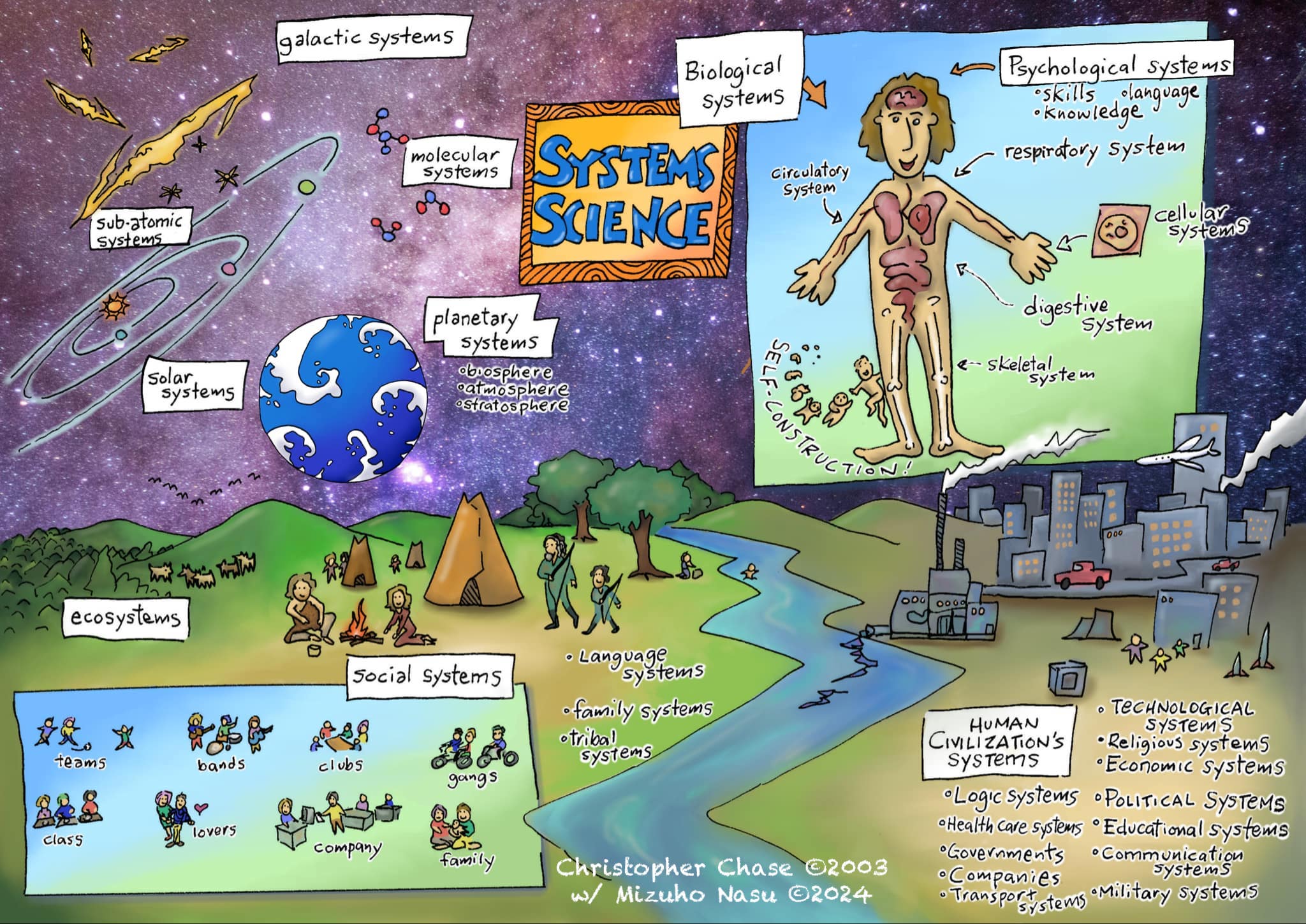
- Strengthening adaptive learning in complex systems. By recognising emergent and vanishing properties in social, ecological, and technological systems, organisations can adopt more flexible, context-sensitive strategies that account for both stability and change.
Ultimately, this paper positions poly-perspectivism not as a theoretical abstraction but as a practical methodology for navigating the complexities of systemic collaboration. In line with the ISSS conference theme of "Advancing Together", it provides a conceptual and operational foundation for leveraging diverse perspectives constructively, ensuring that collaboration between organisations is not hindered by epistemological differences but strengthened by them through productive coordination.